Precision engineering for demanding UAV operations



Hybrid UAV Generator Systems for Mapping, Inspection, and Remote Logistics
Hybrid UAV Generator Systems for Mapping, Inspection, and Remote Logistics
For project managers overseeing mapping, inspection, and remote logistics operations, reliable airborne power can determine whether critical missions stay on schedule. A hybrid UAV generator system combines extended endurance with flexible energy support, helping teams reduce downtime, expand operational range, and maintain consistent performance in demanding industrial environments. The practical value is not simply “longer flight time.” It is the ability to plan a workday around the mission rather than around repeated battery swaps, uncertain charging access, or an aircraft returning before the task is complete.
That distinction matters on industrial sites. A drone used for a short roof survey near a fully equipped field office has very different power requirements from one inspecting a pipeline corridor, documenting a transmission route, or moving urgent components between isolated work areas. In the second group of applications, battery logistics often become the hidden constraint. Teams may have enough aircraft and payloads, but not enough charged packs, trained support staff, transport capacity, or safe charging locations to keep the operation moving.
A well-matched hybrid configuration can address part of that problem. It can also introduce new considerations: fuel handling, vibration, maintenance intervals, noise, thermal behavior, weight distribution, and operating approvals. The right decision is therefore not “hybrid versus electric” in the abstract. It is whether the mission profile justifies the added system complexity.
What “Hybrid” Means in a UAV Power Plan
The term UAV generator is used broadly in the market, and that can create confusion during early planning. In some systems, a compact engine-generator unit supplies electrical power in flight, either continuously or as part of a combined battery-and-generator architecture. In other operations, the generator remains on the ground and supports battery charging at a remote launch point. Both approaches can improve field availability, but they solve different problems.
An onboard hybrid power system is generally considered when the aircraft must remain airborne longer than a battery-only platform can reasonably support at the required payload and safety reserve. The battery can handle high transient demand, such as takeoff, maneuvering, or payload changes, while the generator supplies sustained energy and may recharge or stabilize the battery during cruise. Exact behavior depends on the airframe and control architecture; it should never be assumed from a generic “hybrid” label.
A ground-based generator strategy is usually more appropriate when flights themselves remain relatively short, but the project is remote enough that grid power is unavailable or unreliable. In that case, the operational benefit comes from maintaining a controlled charging cycle in the field. It does not extend the endurance of a single sortie, but it can prevent an entire crew from waiting several hours for batteries to recharge.
Before comparing equipment, define which of these bottlenecks is actually affecting the job: airborne endurance, charging access, sortie turnaround, payload power demand, or the distance between the site and the nearest dependable power source. More than one may be present, but one normally drives the economics.
Mapping Missions: When Endurance Changes the Survey Design
Large-area mapping is often presented as a straightforward endurance problem, but flight duration is only one part of it. Survey quality depends on overlap, altitude, ground speed, lighting conditions, terrain variation, payload settings, and the route needed to maintain an acceptable communication and recovery plan. A drone that stays aloft longer is useful only if the mission can safely make use of that extra time.
For corridor mapping, a hybrid UAV generator system may allow a team to cover longer continuous sections of road, rail, utility alignment, or construction access routes without breaking the work into many short blocks. That can simplify data continuity and reduce repeated launch-and-landing cycles. Fewer transitions can also help when a field team is working from uneven terrain or a narrow temporary work zone.
Still, a longer sortie is not automatically a better sortie. On a site with rapidly changing weather, variable wind around ridgelines, or restricted recovery options, it may be more sensible to divide the survey into deliberate segments. The team should retain a meaningful energy reserve for diversion or safe landing rather than treating the maximum stated endurance as usable mission time.
Payload compatibility deserves equal attention. High-resolution optical cameras, LiDAR units, thermal sensors, and stabilized gimbals each add weight and electrical demand. A generator-powered aircraft may have the endurance to carry a payload farther, but vibration and electromagnetic behavior need evaluation against the sensor’s data-quality requirements. For precision mapping, a technically successful flight that produces blurred imagery, unstable point clouds, or unreliable georeferencing is still a failed mission.
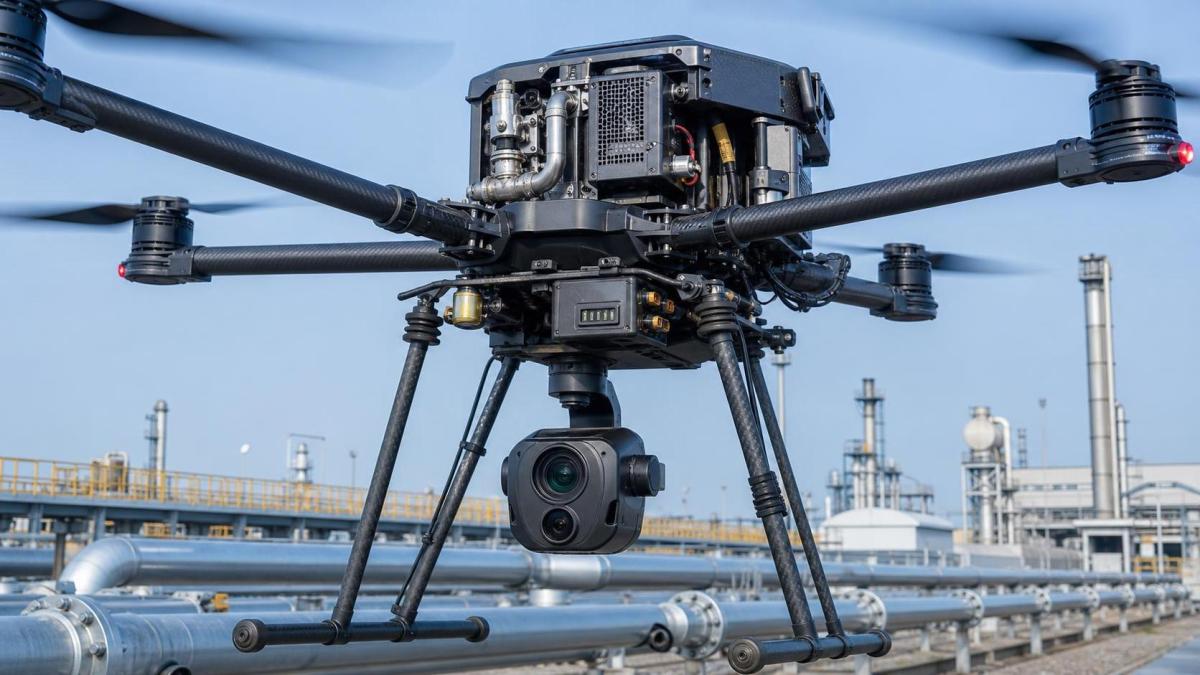
Inspection Work Rewards Predictable Power More Than Maximum Range
Inspection missions often involve hovering, slow passes, repeated repositioning, and high payload utilization. Those conditions can be harder on energy planning than a smooth mapping route. A visual inspection of elevated structures, process equipment, bridges, towers, or long industrial assets may require the aircraft to hold position while an operator examines a specific area. Wind, heat rising from equipment, and changing payload angles can increase power demand at exactly the point where teams want stable image capture.
This is where the practical strength of a hybrid system is consistency. Instead of planning around a steep battery decline and an urgent recovery window, the crew may be able to maintain a more stable operating period, provided the generator and battery are sized for the actual load. That can reduce pressure on the pilot and payload operator during detailed work. It should not encourage unnecessary loitering. Inspection plans still need clear task boundaries, abort criteria, and a defined return reserve.
Industrial inspection also makes acoustic and vibration assessment unavoidable. A compact engine-generator can produce vibration patterns that do not matter for a simple delivery flight but can affect optical zoom, thermal image stability, or sensor calibration. Mounting design, isolation components, propeller balance, engine condition, and payload stabilization all interact. These are integration questions, not items to leave until procurement is complete.
There is a similar issue with maintenance access. If the aircraft will be used near dusty aggregate operations, marine infrastructure, agricultural storage, or chemical processing areas, contamination control matters. The project plan should state who inspects air filters, fuel connections, cooling paths, fasteners, and generator mounting points, and how those checks are recorded. A hybrid platform is not difficult to operate when managed correctly, but it does demand a more disciplined maintenance routine than a basic battery aircraft.
Remote Logistics: The Useful Question Is Payload per Operational Day
Remote logistics is where hybrid power can look especially attractive, because the cost of a delayed delivery may be far higher than the cost of energy. A work crew waiting for a small replacement part, test sample, document package, medical item, or specialized tool may lose valuable time if the only alternative is a vehicle trip over difficult terrain. Yet logistics planning should not be based on headline range alone.
The more useful measure is whether the system can reliably complete the required payload movements across an entire shift. That includes loading time, dispatch approval, weather holds, refueling or battery service, landing-zone readiness, turnaround inspection, and the possibility of an unsuccessful delivery attempt. A remote route with no safe alternate landing locations requires a more conservative plan than a route with several established recovery points.
Payload growth changes everything. A platform that performs well with a lightweight package may have significantly different endurance, handling, and landing behavior when the load increases or shifts the center of gravity. Delivery containers should be evaluated for secure retention, weather protection, visibility, and release method. It is also worth deciding early whether the receiver needs the aircraft to land, hover and lower a package, or drop a secured payload into a defined zone. Each method affects flight risk and ground procedures.
For recurring remote logistics, the best setup is often not the one with the most sophisticated air vehicle. It is the one with repeatable handover procedures, simple fuel or charging logistics, trained personnel at both ends, and a realistic plan for bad-weather days.
Choosing a System Without Buying Unnecessary Complexity
A hybrid UAV generator system should be assessed as part of an operating model, not as a standalone component. The following questions usually reveal whether the additional complexity is justified:
- What is the real mission duration, including reserve and recovery time, rather than the ideal flight duration?
- How much payload power is required throughout the flight, and are there short periods of unusually high demand?
- Will the aircraft spend most of its time in forward flight, hovering, or slow inspection maneuvers?
- Can fuel be stored, transported, and handled safely at the operating site under applicable local requirements?
- Does the sensor package tolerate the vibration, noise, and electromagnetic environment created by the power system?
- Who will perform field maintenance, troubleshoot faults, and manage spare parts when the manufacturer is not nearby?
- Are there operational restrictions relating to aircraft mass, noise, flight location, visual observation, or beyond-visual-line-of-sight activity?
That last point needs particular care. Aviation requirements vary by jurisdiction and by mission type. A hybrid platform may change the aircraft’s weight, operating characteristics, and risk profile, so teams should confirm the applicable rules and approval pathway before building a schedule around a specific concept of operations. Equipment capability does not replace regulatory authorization, pilot competency, site permissions, or emergency planning.
Integration Details That Often Get Missed
The weakest part of a hybrid deployment is frequently not the generator itself. It is the interface between systems. Electrical connectors must tolerate field handling and environmental exposure. Fuel lines and tanks need secure routing and inspection access. Cooling must remain effective when the aircraft is operating in warm, dusty, or high-altitude conditions. The flight controller needs a clear response strategy for generator output loss, low battery state, sensor fault, and unexpected changes in power demand.
It is wise to request a mission-level energy model rather than relying on a single endurance figure. The model should account for takeoff, climb, cruise, hovering, payload operation, descent, contingency reserve, and expected environmental conditions. If the supplier cannot explain how these factors affect the estimate, the number is not yet useful for project planning.
Field trials should be staged. Begin with basic aircraft behavior, then add the intended payload, then test representative mission segments. Do not jump directly to the longest route or the most difficult operating environment. The purpose is to identify thermal issues, vibration effects, control behavior, radio coverage gaps, and servicing delays before they become a project disruption.
A Better Way to Frame the Decision
Hybrid power makes sense when it removes a genuine operational bottleneck: repeated battery changes on a long corridor, limited field charging capacity, sustained inspection time with a demanding payload, or remote deliveries where ground transport is slow and inconsistent. It is less compelling when missions are short, charging infrastructure is available, and the crew can rotate batteries without disrupting the work.
The strongest projects treat the UAV generator as one element in a broader operational system. They match aircraft endurance to route design, sensor demand, recovery options, maintenance capability, and local operating rules. That approach is less dramatic than choosing the platform with the biggest advertised number, but it is usually what keeps mapping, inspection, and remote logistics missions running when site conditions are less than ideal.
Contact Us